
Synopsis:
Augustine dedicates room in his Confessions for a discussion of the essence of God vis-à-vis time. Within such a context, Augustine analyzes how time interacts within human perception – and advances a thesis of presentism. God, Augustine decides is beyond space time – but humanity exists within a third dimensional space of three dynamic presentisms.
Excerpts:
“It will see that a long time is long only because constituted of many successive movements which cannot be simultaneously extended. In the eternal, nothing is transient, but the whole is present. But no time is wholly present. It will see that all past time is driven backwards by the future, and all future time is the consequent of the past, and all past and future are created and set on their course by that which is always present.
“You created all times and you exist before all times. Nor was there any time when time did not exist… you made time itself. No times are coeternal with you since you are permanent. If they were permanent, they would not be times.
“When a true narrative of the past is related, the memory produces not the actual events which have passed away but words conceived from images of them, which they fixed in the mind like imprints as they passed through the senses. Thus my boyhood, which is no longer, lies in past time which is no longer. But when I am recollecting and telling my story, I am looking on its image in present time, since it is still in my memory.
“What is by now evident and clear is that neither future no past exists, and it is inexact language to speak of three times – past, present, and future. Perhaps it would be exact to say: there are three times, a present of things past, a present of things present, a present of things to come. In the soul there are these three aspects of time, and I do not see them anywhere else. The present considering the past is the memory, the present considering the present is immediate awareness, the present considering the future is expectation.
“A long future is a long expectation of the future. And the past, which has no existence, is not a long period of time. A long past is a long memory of the past.
*All excerpts have been taken from Confessions, Oxford University Press.
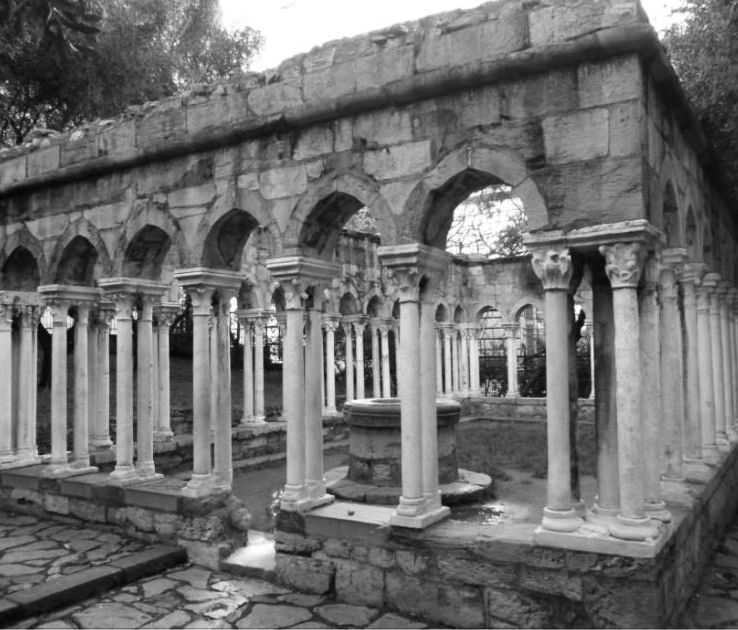
 Consolation of Antiquity
You must be logged in to post a comment.