Crowds – Seneca

Synopsis:

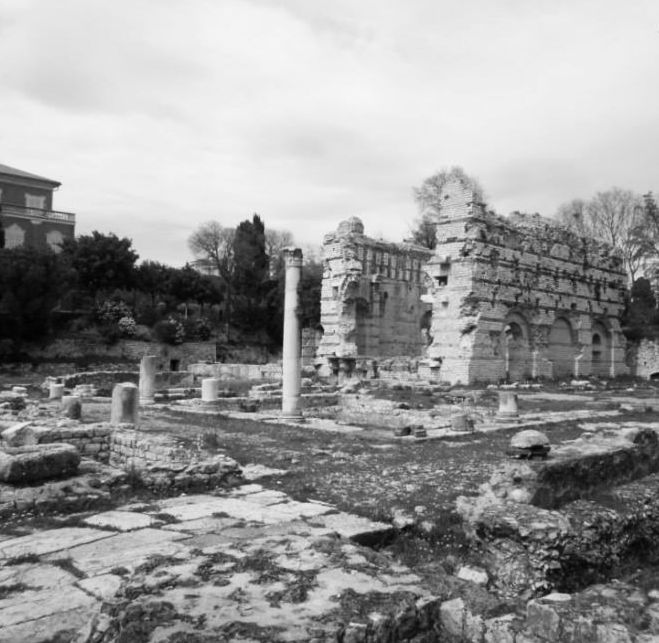
In letter #7, Seneca grapples with the nature of crowds. He catechizes the influence crowds have on the human soul, and traces the remedies for its negative effects.

Excerpts:

“Contact with the crowd is deleterious; inevitably vice will be made attractive or imprinted on us or smeared upon us without our being aware of it. In every case, the larger the crowd with which we mingle the greater the danger.

“A single example of luxury or avarice works great mischief. A comrade who is squeamish gradually enervates us and makes us soft; a neighbor who is rich pricks up our covetousness; a companion who is malicious rubs some of his rust off upon us, however frank and ingenuous we may be.

“Retire into yourself, so far as you can. Associate with people who may improve you, admit people whom you can improve. The process is mutual; men learn as they teach.

“There is no reason why ambition to advertise your talents should lure you to the public platform to give popular readings or discourses. I should agree to your doing so if your wares suited such customers, but none of them can understand you. A solitary individual or two may come your way, but even him you will have to educate and train to understand you. ‘Then why did I learn all this?’ Never fear that you have wasted your effort; you learned for yourself.

“When asked the object of applying himself so assiduously to an art which would reach so very few people, he said: ‘For me a few are enough, one is enough, none is enough.

*All excerpts have been taken from The Stoic Philosophy of Seneca: Essays and Letters, W.W. Norton.
Philosophy and Progress – Seneca

Synopsis:

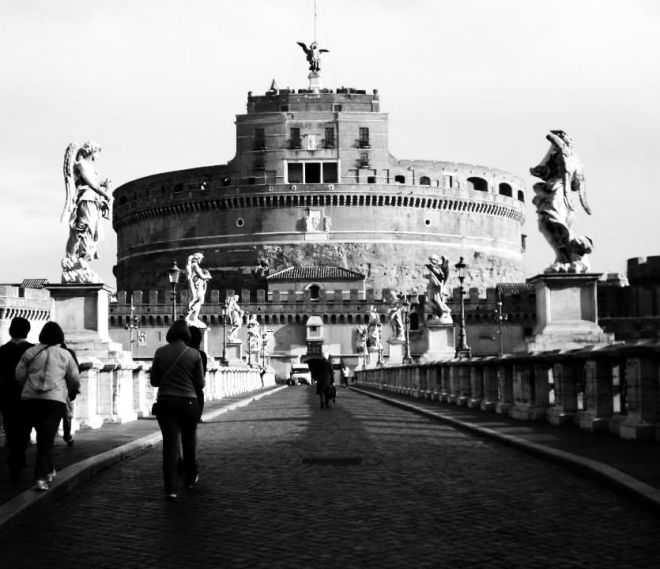
In letter #90, Seneca examines the purpose of philosophy in life. He fuses his own Stoic philosophy with ideas on the art-of-living, the development of government, and the pursuit of wisdom.

Excerpts:

“If they had made philosophic knowledge also a common attribute and we were all born wise, then wisdom would have forfeited its principal quality, which is that it is not fortuitous.

“The natural measure which limited desires by essential requirements has retreated; to desire a mere sufficiency is now a mark of boorishness and wretchedness.

“Wisdom turns to the incorporeal and scrutinizes truth and its manifestations and determines the modes for distinguishing ambiguities in life or speech, for in both the false is mingled with the true.

“Virtue is not Nature’s gift; to become good is an art.

“Virtue can occur only in a soul trained and taught and raised to its height by assiduous exercise.

*All excerpts have been taken from The Stoic Philosophy of Seneca: Essays and Letters, W.W. Norton.
On Moderation – Seneca

Synopsis:

In letter #5, Seneca examines a middle-road of moderation for philosophers vis-à-vis human action. According to Seneca, moderation ought to project externally via an exemplary lifestyle which embraces a synthesis of individual and public virtues.

Excerpts:

“The mere title of philosophy, however modestly worn, is invidious enough; what if we should begin to except ourselves from the ordinary uses of mankind?… Our endeavor must be to make our way of life better than the crowd’s, not contrary to it; else we shall turn from us and repel the people we wish to improve.

“This I hold is the correct mode: life should be steered between good mores and public mores; men should respect our way of life, but they should find it recognizable.

“Will there be no distinction between us and them? A very great distinction. Anyone who looks closely will realize that we are unlike the crowd. Anyone who enters our home will admire us rather than our furniture.

“Beasts avoid the dangers which confront them, and when they have avoided them they stand at ease; we are tormented alike by the future and the past. Our superiority brings us much distress; memory recalls the torment of fear, foresight anticipates it. No one confines his misery to the present.

*All excerpts have been taken from The Stoic Philosophy of Seneca: Essays and Letters, W.W. Norton.
Old Age – Seneca

Synopsis:

In letter #12, Seneca wrestles with the idea of aging. On balance, Seneca decides aging is a positive good – but only for those who recognize it.

Excerpts:

“In the first place, old and young alike should have death before their eyes; we are not summoned in the order of our birth registration. In the second place, no one is so old that he cannot legitimately hope for one day more, and one day is a stage of life.

“Every day must therefore be ordered as if it were the last in the series, as if it filled our measure and closed our life.

“What he did out of perverted motives we should do out of good, and as we retire to our beds we should say, cheerfully and contentedly, ‘I have lived; I have finished the course Fortune set me.’

“We should welcome old age and love it; it is full of pleasure if you know how to use it. Fruit tastes best when its season is ending; a boy is handsomest at boyhood’s close; and it is the last drink which brings the toper delight, the one that submerges him and polishes off his jag. Every pleasure saves its most agreeable scene for the finale.

“Life as a whole consists of parts, with larger circles circumscribed about smaller. One circle encompasses and cinches the rest; it extends from our first day to our last.

*All excerpts have been taken from The Stoic Philosophy of Seneca: Essays and Letters, W.W. Norton.
Maxims – Seneca

54

Synopsis:

In letter #33, Seneca defines the balance between derivative reasoning, and novel thinking. According to Seneca, erudition functions only as a means to an end – rather than an end itself.

Excerpts:

“All those men who never create but lurk as interpreters under the shadow of another are lacking, I believe, in independence of spirit. They never venture to do the thing they have long rehearsed. They exercise their memories on what is not their own. But to remember is one thing, to know another.

“You may recognize unevenness in a work when attention is attracted by what rises above the level. One tree is not noteworthy if the whole forest rises to the same height.

“Don’t expect, then, that you can sample the masterpieces of great minds by way of summaries; you must examine the whole, work over the whole. Their structure is a totality fitted together according to the outlines of their special genius, and if any member is removed the whole may collapse…An admired ankle or arm does not make a woman beautiful; a beautiful woman is one whose total appearance silences praise of her parts.

“If we rest content with solutions offered, the real solution will never be found. Moreover, a man who follows another not only finds nothing, he is not even looking.

*All excerpts have been taken from The Stoic Philosophy of Seneca: Essays and Letters, W.W. Norton.
On Living in Accordance with Nature – Cicero

Synopsis:

In Book One of On Duties Cicero examines the vital center of Stoicism – i.e. living in accordance with human nature. According to Cicero, human nature is underpinned by human action, and human action is supported by reason. Likewise, reason is balanced by virtue.

Excerpts:

“A salient characteristic of humankind is our quest for truth. When we are free from necessary care and labor, we long to see, hear, and learn, and we regard knowledge of hidden and marvelous matters as essential to a happy life.

“For whenever it’s impossible for the majority to excel, competition becomes so intense that it’s extremely difficult to maintain the sacred bond of social order.

“For it is appropriate to refer to the basic elements of justice I described at the outset: first, not to harm anyone; second, to be of service to the common good.

“Of the two sources of injury, force and fraud, fraud is fit for foxes, force for lions, and neither is at all suited to human beings.

“The Stoics are thus correct to define courage as virtue struggling on behalf of fairness. This is why a person who acquires a reputation for courage through treachery or foul play does not deserve praise. For nothing is honorable if it is devoid of justice.

*All excerpts have been taken from Cicero: On Living and Dying Well, Penguin Classics.

Philosophy and Progress – Seneca

N

Synopsis:

In letter #90, Seneca examines the purpose of philosophy in life. He fuses his own Stoic philosophy with ideas on the art-of-living, the development of government, and the pursuit of wisdom.

Excerpts:

“If they had made philosophic knowledge also a common attribute and we were all born wise, then wisdom would have forfeited its principal quality, which is that it is not fortuitous.

“The natural measure which limited desires by essential requirements has retreated; to desire a mere sufficiency is now a mark of boorishness and wretchedness.

“Wisdom turns to the incorporeal and scrutinizes truth and its manifestations and determines the modes for distinguishing ambiguities in life or speech, for in both the false is mingled with the true.

“Virtue is not Nature’s gift; to become good is an art.

“Virtue can occur only in a soul trained and taught and raised to its height by assiduous exercise.

*All excerpts have been taken from The Stoic Philosophy of Seneca: Essays and Letters, W.W. Norton.